We transform your HR and TA data into intuitive dashboards in just 5 days – no data expertise required.

You’ve painstakingly created a great leadership team that consistently delivers for your organization and has the company on the fast track to growth. There’s just one problem. Your cohesive team won’t stay together forever. How you handle the departure of key C-suite executives and department heads will make or break your business.
How can you win at succession planning and position your company to thrive in the long term? Here’s everything you need to know.
A strong succession plan supports your company’s long-term stability by maintaining a steady flow of skilled leadership and retaining top talent. Talent retention is critical to developing the leaders of tomorrow. Employees who see growth opportunities within the organization are more likely to stay, reducing turnover and building a stronger team.
Succession planning gives you an opportunity to cultivate homegrown talent and promote from within. This can be particularly beneficial when filling high-level roles in the C-suite.
According to Harvard Business Review, CEOs hired externally are 84% more likely to leave within the first three years than those promoted internally. Researchers found that poor performance was the most common cause.
If you invest in developing a robust leadership pipeline, you’ll have a competitive advantage within your industry. You’ll be better equipped to adapt in times of change while promoting business continuity.

Building a successful succession plan requires a holistic approach.
Start by defining which roles are essential to business continuity. Identify employees who display potential to take on these roles, ensuring they align with the company’s future direction. Talent analytics tools can help you create a short list of potential successors for key roles within your organization.

Assess the skills and competencies required for future leadership needs. This helps ensure successors are prepared with the specific expertise needed to thrive in their respective roles.
Facilitating knowledge transfer from current to future leaders is key. Mentorship programs can reduce the learning curve for core team members as they take on new responsibilities or step into executive roles.

To develop well-rounded leaders, you should expose potential successors to various business areas through cross-functional training. For instance, if you are prepping a few promising candidates for the sales department manager role, cross-train them in marketing. This achieves two things.
First, the prospective leaders will better understand the connection between marketing and sales. Second, you will have an opportunity to evaluate how versatile and adaptable your top prospects are when placed in new and challenging situations.
According to Forbes, roughly 70% of succession plans go off the rails within two years of implementation. Why? A lack of buy-in among senior leadership is often to blame.
To overcome this, you’ll need to ensure your succession plan reflects the company’s overall goals and culture. Leaders should embody the company’s values to maintain a cohesive organizational environment.
Effective succession planning goes beyond identifying potential leaders. You’ll need to actively prepare the most promising prospects for success. Here are several key steps to equip future leaders.
Use a combination of performance reviews and 360-degree feedback to identify high-potential employees. Competency assessments are a great tool for determining who may have that spark needed to lead others. Look for individuals who exhibit a combination of technical expertise and emotional intelligence.
Deploy talent engagement strategies to encourage active participation in personalized training plans. For example, you can work with promising leadership candidates to discuss their strengths and areas where they can improve. Together, you can create customized plans that are relevant and impactful.
Give potential successors hands-on experience through mentorship programs, coaching, and cross-departmental projects. These experiences are invaluable for developing the skills and confidence needed to lead effectively.
Consistency holds the key to effectively using retention data. You can’t just periodically check in on the numbers. If you do, you’ll miss important trends and end up taking a reactive approach, instead of proactively addressing the data you’re seeing. Establish a clear framework for measurement and ensure everyone involved in collecting data follows a standardized process.
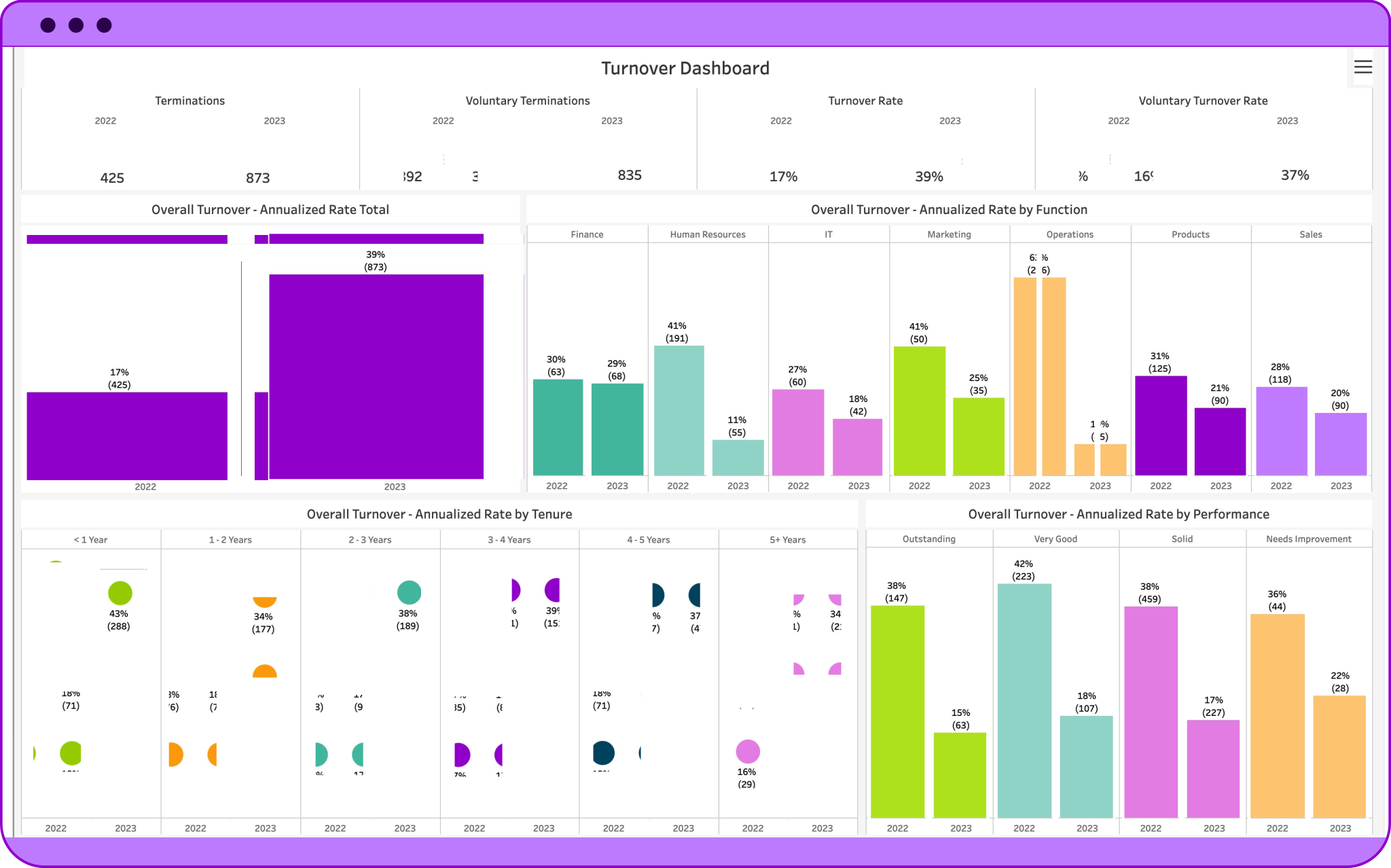
If you want to give yourself an edge in the fight to retain talent, invest in people analytics software like PeopleInsight by Hireroad. The platform allows you to track metrics over time and organize the data into visual charts that make the information easier to digest.
A holistic view of your retention strategy goes beyond looking at turnover metrics alone. Dashboard visualizations like the ones in PeopleInsight allow you to look at engagement data, cost of turnover, productivity, termination reasons, and other key retention metrics all in one place, to give you a comprehensive understanding of all the factors that play a role in employee retention.
For succession planning to be effective, it must be systematic and integrated into your company’s operations. These steps can help you achieve that.
Define what the succession plan aims to achieve, whether it’s developing future leaders or reducing turnover. If you know an important member of the leadership team is retiring soon, you can incorporate that information into your succession planning objectives. Having clear objectives creates a sense of purpose and direction.
Include board members, executives, and department heads in succession planning discussions. Their insights are invaluable in shaping a succession strategy that aligns with the company’s overall vision.
Align succession planning with existing performance management systems to create a cohesive approach to talent development. This also allows for continuous tracking of a potential leader’s progress.
Consider using technology solutions to streamline succession planning. Tools for skills assessment, competency mapping, and development tracking can simplify the process and improve accuracy.
Just one out of four private companies have developed formal succession plans. Why? It may be because creating a cohesive succession plan isn’t easy. In fact, the entire process can be exceptionally challenging. Here are a few hurdles you need to be aware of as you plan for the future.
Shake-ups to company leadership, even planned ones, can create friction among your staff members. Departments may be hesitant to embrace an incoming manager. It’s important to openly communicate with employees about the benefits of succession planning while supporting individuals who are stepping into key leadership roles.
Succession planning efforts can kick off water cooler gossip mills and get the entire company talking about who the next executive will be. You should do your best to be transparent about your succession planning efforts while maintaining enough confidentiality regarding selection processes.
Be careful not to put undue pressure on potential successors or disappoint those who may not be selected.
Your business needs to evolve, and succession plans must be included in those adaptations. Review and adjust your succession plan to ensure it remains aligned with the organization’s goals.
Succession plans need to align with big-picture business objectives and DEI goals. Your organization must work toward creating a more diverse and equitable workforce while simultaneously rewarding loyal team members who have devoted years to the business.
HR measurement represents a critical part of succession planning. Here are a few ways to measure the efficacy of your succession plan:
Remember, succession planning should be a dynamic process. Use feedback and performance metrics to refine the plan continually, making improvements as needed to adapt to changes.
If you want to accurately measure the effectiveness of your succession planning, invest in people analytics software like PeopleInsight by Hireroad. The platform allows you to track changes over time as well as organize the data into easy to digest visualizations and charts that help democratize your HR data to help showcase the impact of your succession initiatives.
Regardless of where your organization is in its succession planning journey, there is good news.
Modern HR technologies like people analytics tools make creating agile succession plans more practical than ever. You can proactively analyze the needs of your workforce, track engagement levels, and nurture the next generation of leaders.
AI and predictive analytics tools are the future of succession planning. People analytics platforms provide dynamic information in a digestible format so you can create and execute your succession plan.
To implement an effective succession plan, you’ll need to emphasize a few areas.
These tools help evaluate where your company stands. Conduct an initial readiness assessment to identify your starting point and determine areas that require immediate attention. For example, if a long-time accounting department manager is retiring in the next six months, you need to prioritize that succession planning pipeline.
Develop a clear communication strategy to keep stakeholders informed about the succession planning process. This builds trust and transparency within the organization.
Create a culture that values and supports internal talent development. When employees see opportunities for advancement, they are more motivated to contribute to the company’s success.
Succession plans aren’t concrete. They are living documents that change over time. Review and update them regularly to account for emerging skill requirements and evolving employee aspirations.
Proactive succession planning begins with tapping into the right data. You need a high-quality analytics solution that will inform your decision-making processes and help identify key areas of need within your organizational hierarchy. PeopleInsight from HireRoad is just such a solution.
With PeopleInsight, you can build custom HR dashboards and take the guesswork out of planning for the future. Our dynamic platform includes valuable tools for monitoring engagement, tracking attrition rates, and revolutionizing the way you manage your entire workforce.
Book a free demo with PeopleInsight by HireRoad.